
Distributors Contractors Association
Leadership & Infrastructure
A construction and infrastructure audience focused on disruption, workforce, technology, risk and what comes next for contractor organizations.
Building a smarter, faster, more resilient world.
For more than three decades, Jim Carroll has helped contractors, engineering firms, building-system companies, equipment manufacturers, public agencies and infrastructure leaders understand what comes next - and how to lead through it.
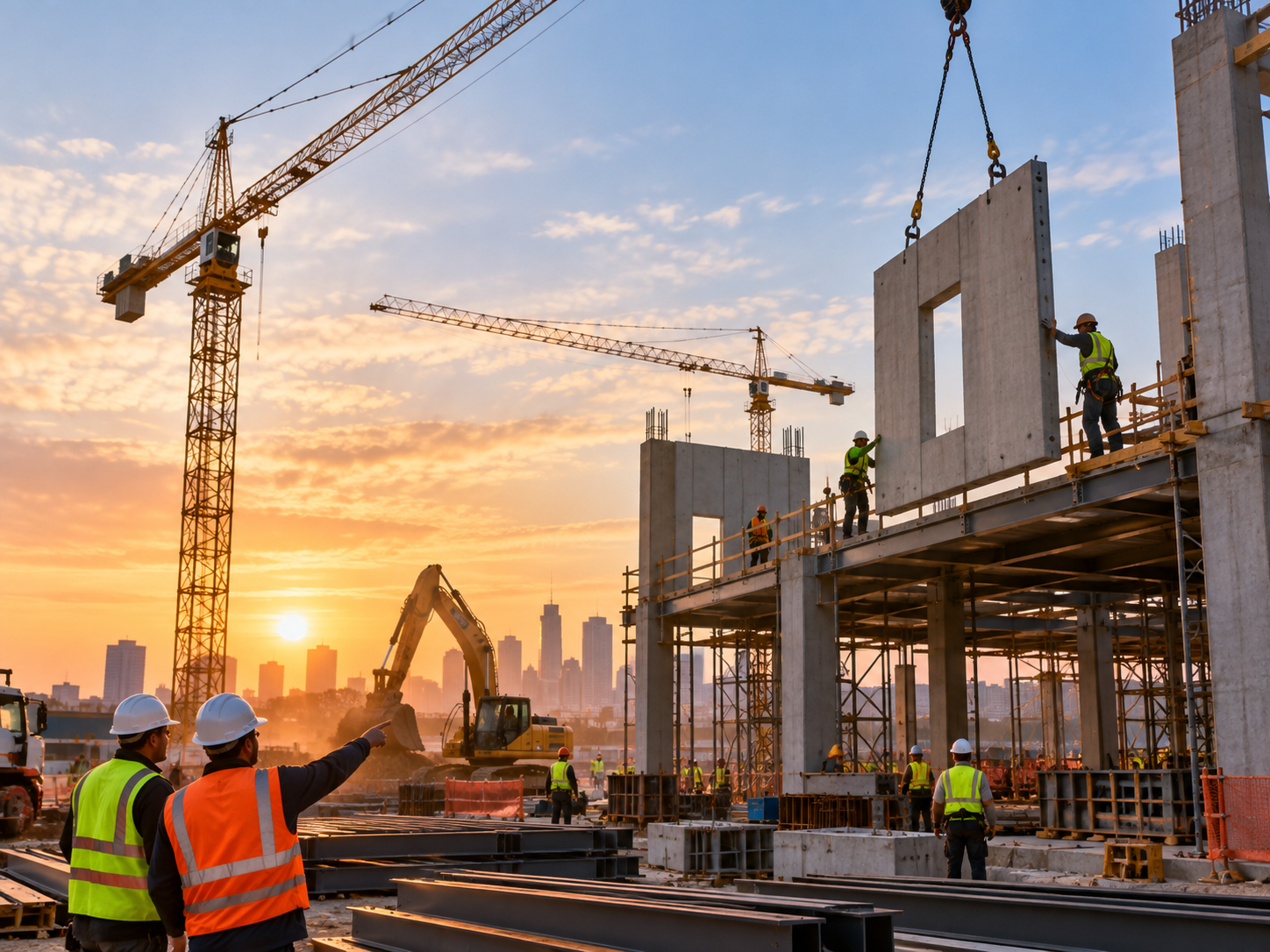
Construction and infrastructure are being reinvented at the same time that leadership teams are being asked to make bigger decisions with less certainty. The keynote must address both.
AI, robotics, digital twins, advanced materials, smart buildings, water, energy, roads, cities and infrastructure investment.
Strategic foresight, decision-making under uncertainty, culture, innovation discipline, workforce transformation and organizational agility.
Translate trends into project, investment, customer and leadership decisions that create smarter, safer and more resilient organizations.
Technology may change the job site. Leadership determines whether the organization changes with it.
Jim has delivered customized keynotes and executive briefings for corporate leadership meetings across construction, engineering, heavy equipment, building systems and infrastructure. The question is rarely just “what is changing?” It is “what must we do differently because it is changing?”
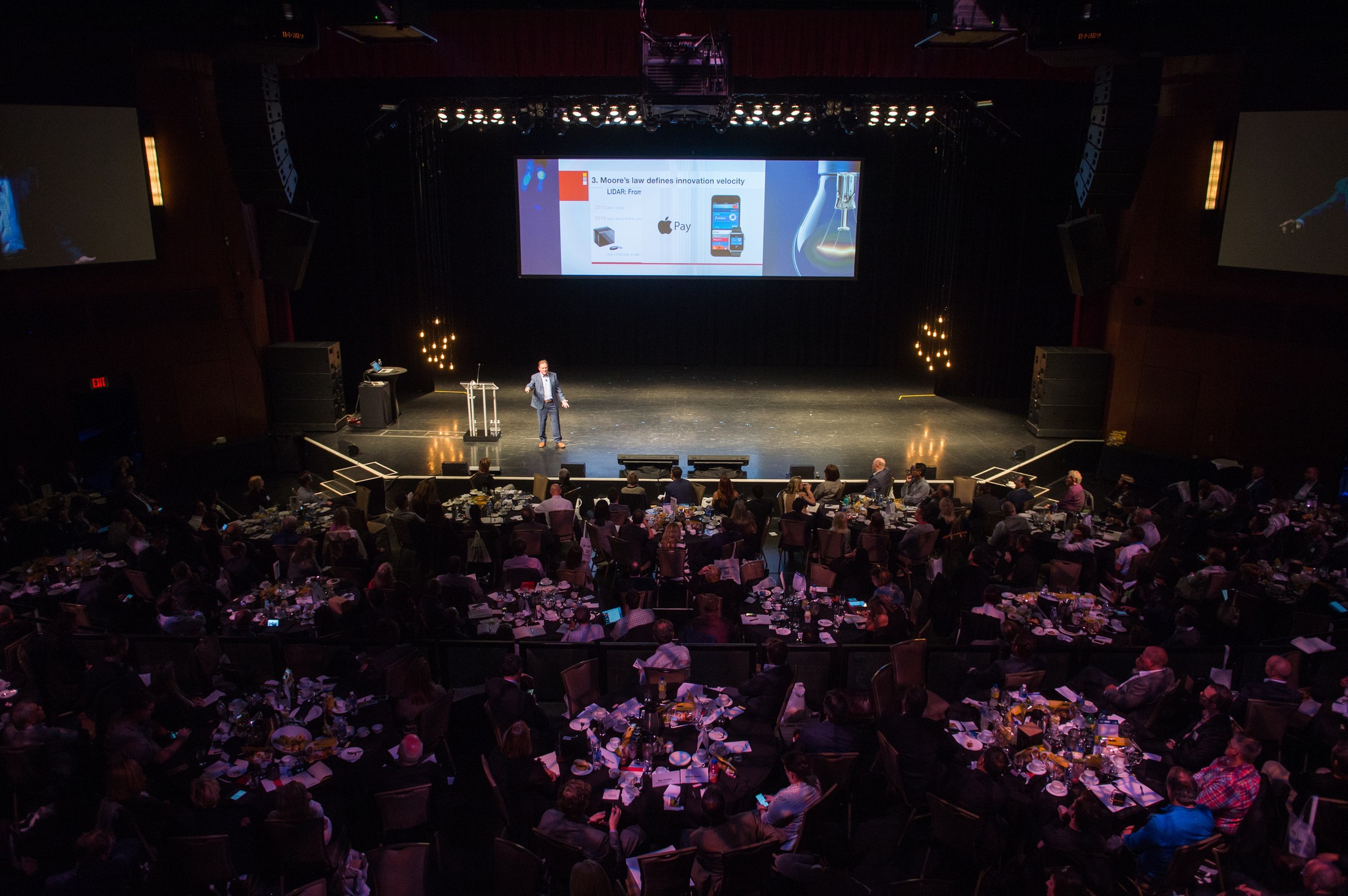
Schedule, budget, scope, safety, quality and execution remain fundamental. But the leadership toolkit is expanding.
Provide clarity when technology, regulation, labour, financing and materials economics are all shifting at once.
Strategies can be perfectly logical and still fail if the assumptions underneath them are five years out of date.
Leaders do not need to code AI or operate a robot. They do need to understand what new capabilities change the economics of a project.
Move beyond pilot theatre. Establish clear guardrails, learn quickly, and scale what works.
Prepare teams for digital twins, robotics, automation, new materials and increasingly data-rich work.
Scenario thinking helps leaders make better decisions before a trend becomes a crisis or an opportunity becomes obvious.
These are not canned speeches. They are possible directions selected and blended around the leadership team, industry audience, event theme and strategic issues in the room.
Building a smarter, faster, more resilient world.
What happens when intelligence comes to the job site.
Robotics, autonomy, safety and the next operating model.
Smart materials, digital twins and the future of the built environment.
Smart roads, advanced materials and intelligent infrastructure.
Water, energy, transportation and cities in an era of volatility.
Construction is moving from a physically intensive, project-based model toward a connected, automated and data-rich ecosystem.
Generative design, estimating, scheduling, risk prediction, contract analysis, safety insight and project controls.
Move from 2D plans to living 4D models used from design and construction through decades of operation.
Autonomous earthmoving, robotic layout, drones, machine vision, paving automation and remote operations.
Shift more work from the job site to the factory floor for speed, quality, repeatability and lower waste.
3D-printed concrete, robotic extrusion and automated forms expand what can be built and how quickly.
Self-healing concrete, carbon-negative materials, solar glass, composites, smart coatings and embedded sensors.
The model is becoming part of the asset.
Digital twins connect design, schedule, cost, commissioning and long-term operations. They let teams simulate scenarios before committing physical resources, then continue generating value after handover through predictive maintenance and performance management.

Four strategic lenses for understanding why construction technology matters to leadership.
Shorten decision cycles, design cycles, procurement cycles and project delivery time.
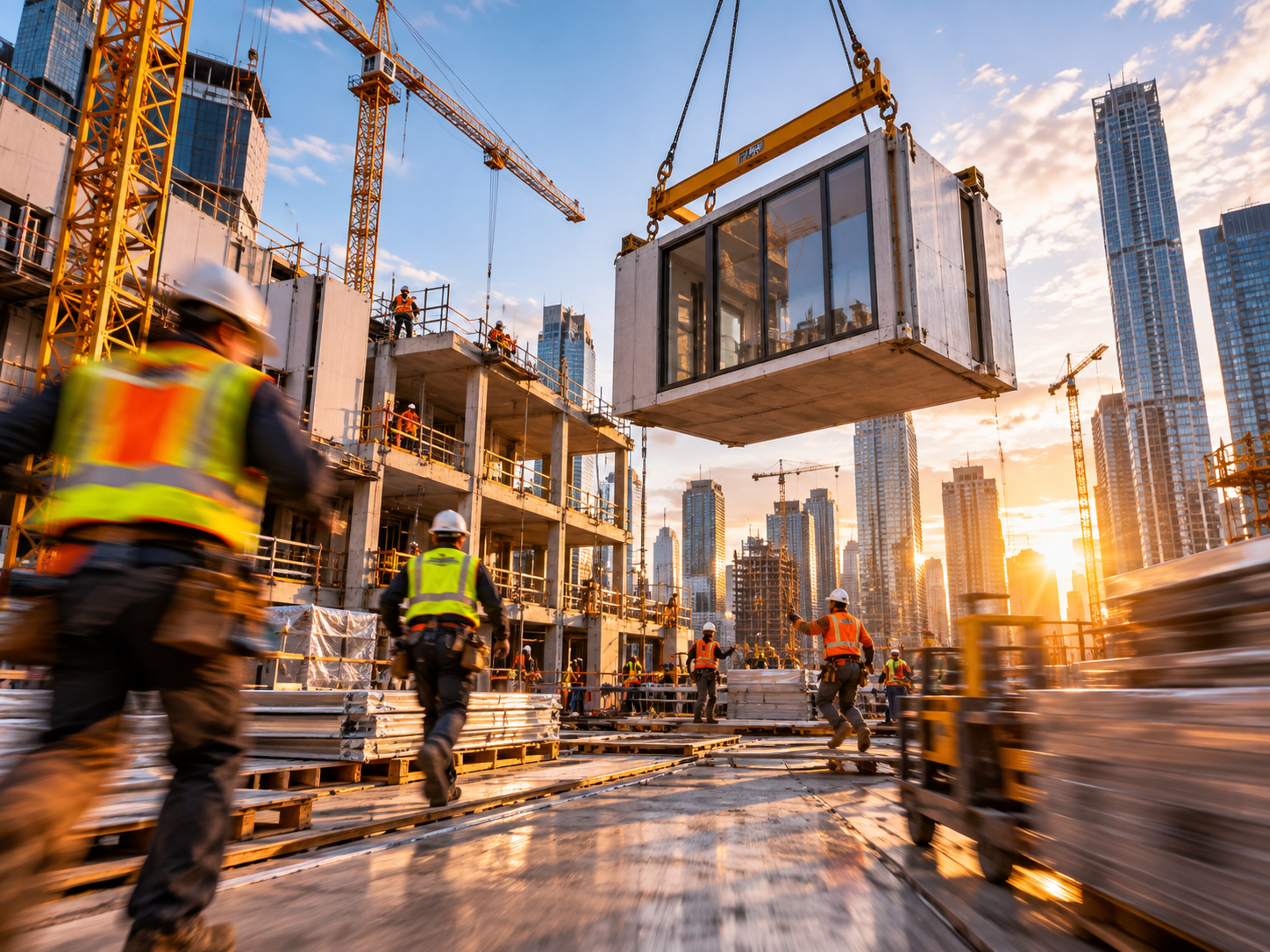
Improve safety, quality, measurement, predictability and first-time-right execution.
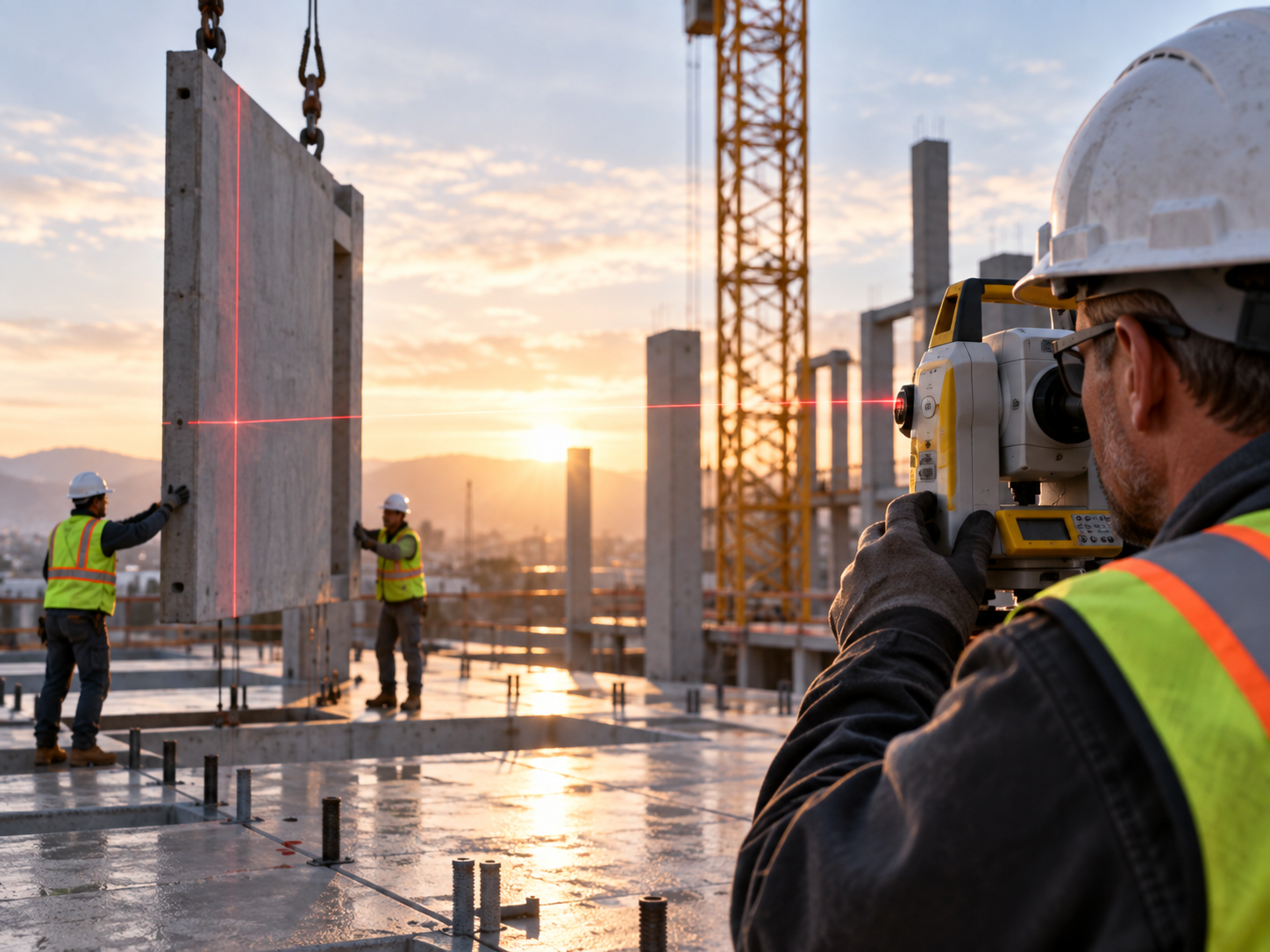
Use data, sensing, AI and digital twins to see problems before they become expensive.
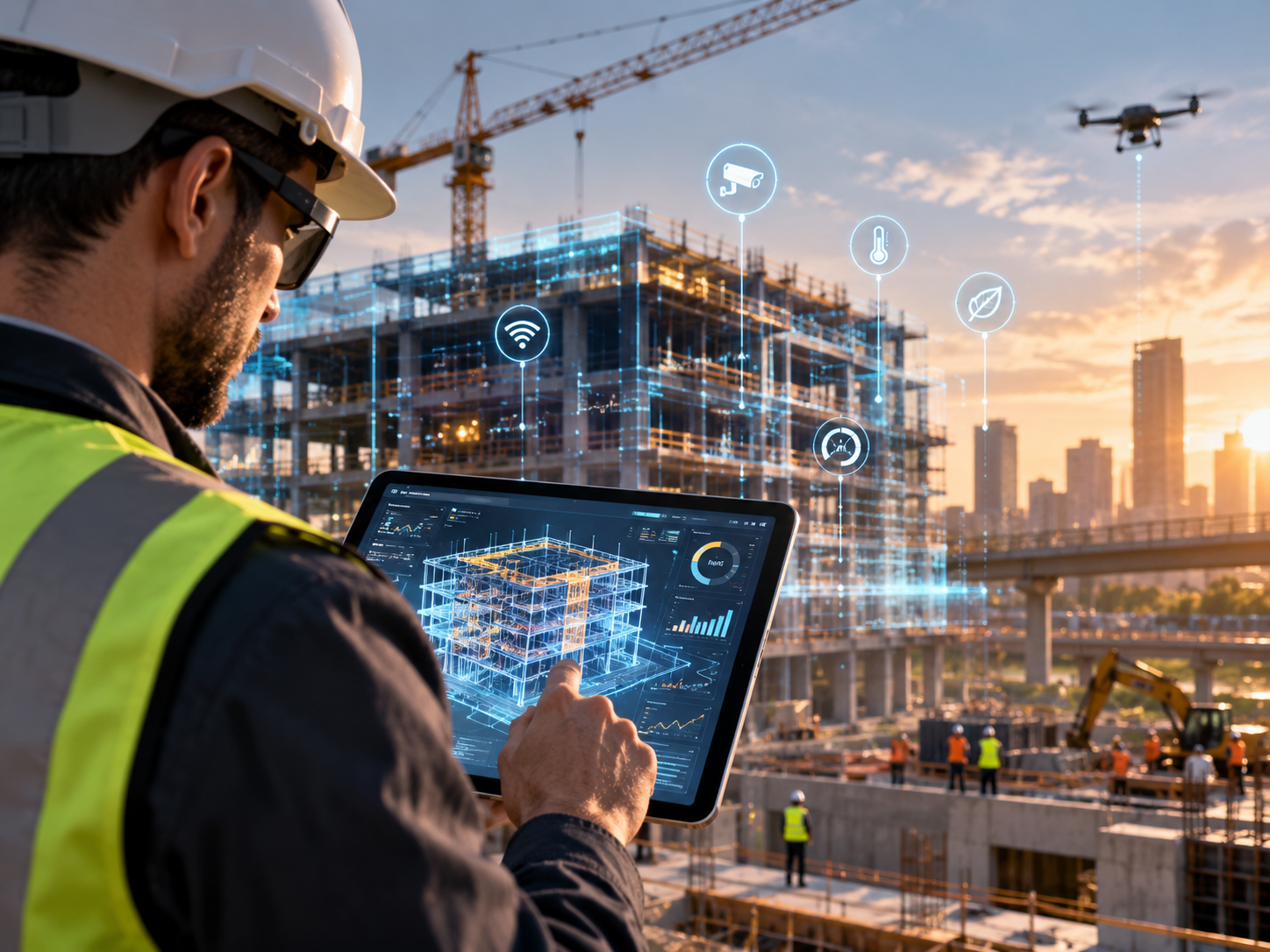
Design projects, assets and organizations to perform through volatility and uncertainty.


Silicon Valley meets HVAC, access, lighting, energy and the physical building.
Connected HVAC, smart lighting, occupancy sensing, access control, predictive maintenance and energy optimization turn a structure into an operating platform. Jim was talking about the marriage of Silicon Valley and HVAC years before smart-building platforms became mainstream.
Roads, bridges, buildings, water systems and power networks increasingly become instrumented, connected and aware.
Machine-guided construction, AI inspection, advanced asphalt, embedded sensing and increasingly autonomous roadbuilding.
Water safety, quality, sourcing, recycling, treatment, leakage intelligence and the enormous modernization challenge.
Microgrids, batteries, EV charging, renewable energy and intelligent buildings increasingly converge into one system.
Mobility, broadband, water, power, buildings and public space become increasingly data-driven and interdependent.
Flood, heat, fire, freeze-thaw, cyber risk, grid interruption and water scarcity change how assets are designed.
Digital twin managers, drone operators, automation specialists, robotics technicians and systems integrators join the traditional trades.
Roadbuilding is becoming a software, sensing and materials-science business as much as a heavy-equipment business.
Jim's roadbuilding and infrastructure work has included Ontario Road Builders Association, Kiewit, Black & Veatch, Colorado Department of Transportation, American Concrete Institute, Alberici, U.S. Army Corps of Engineers and Distributors Contractors Association.
See the construction & infrastructure brief →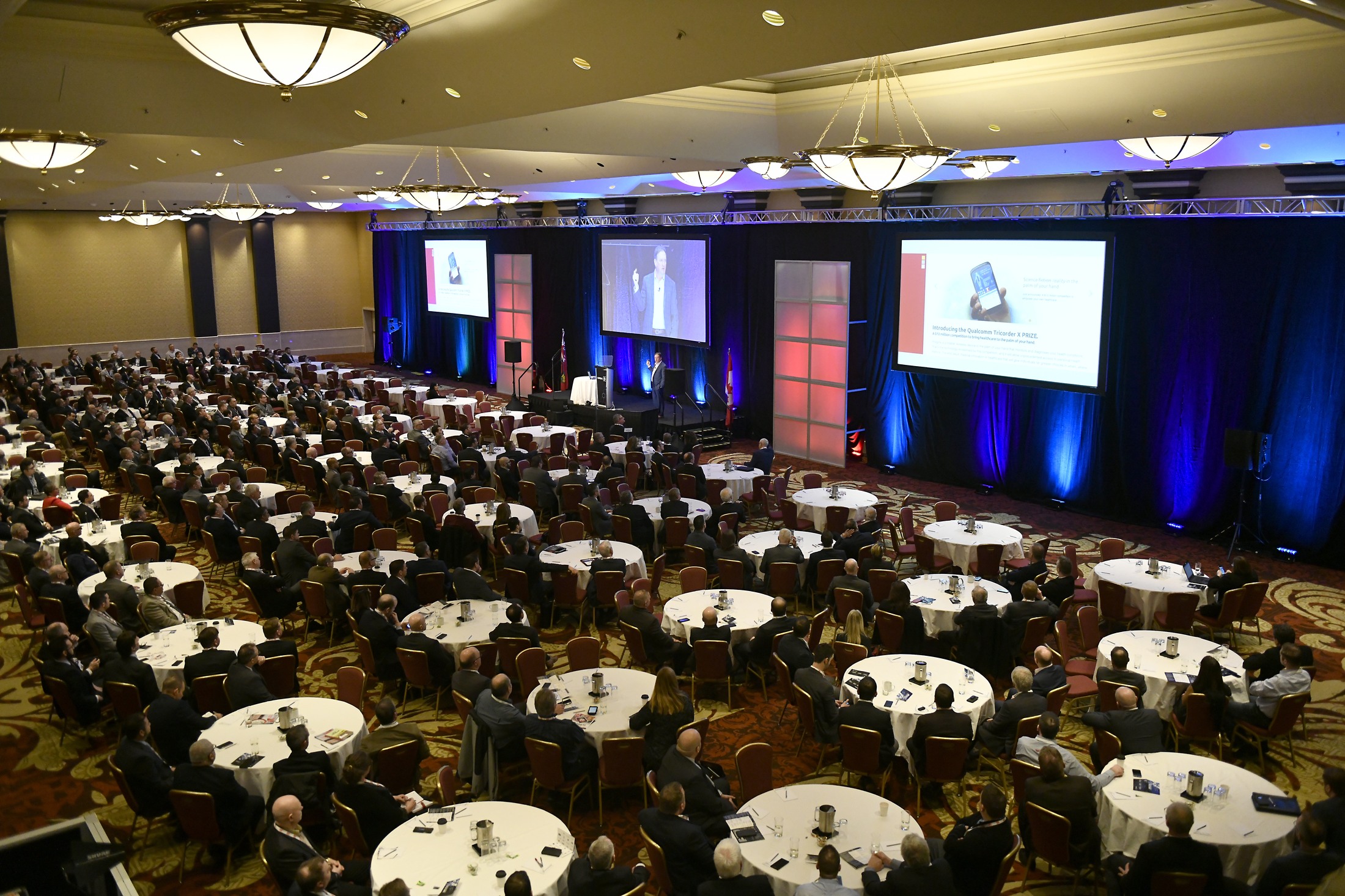
A keynote title is only the starting point. Jim maps the technologies, business-model shifts, workforce issues and leadership decisions reshaping the audience's specific corner of the industry.
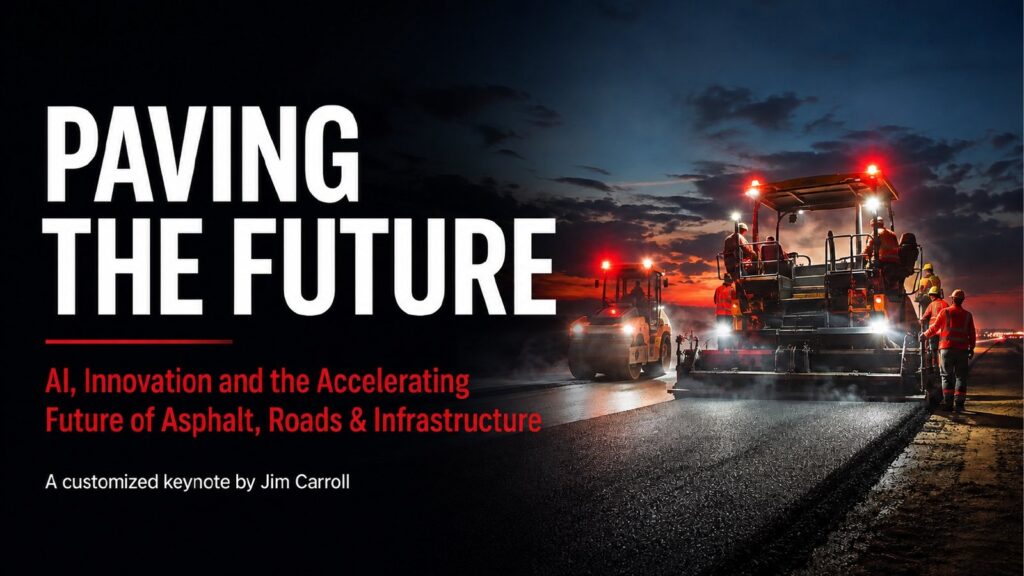
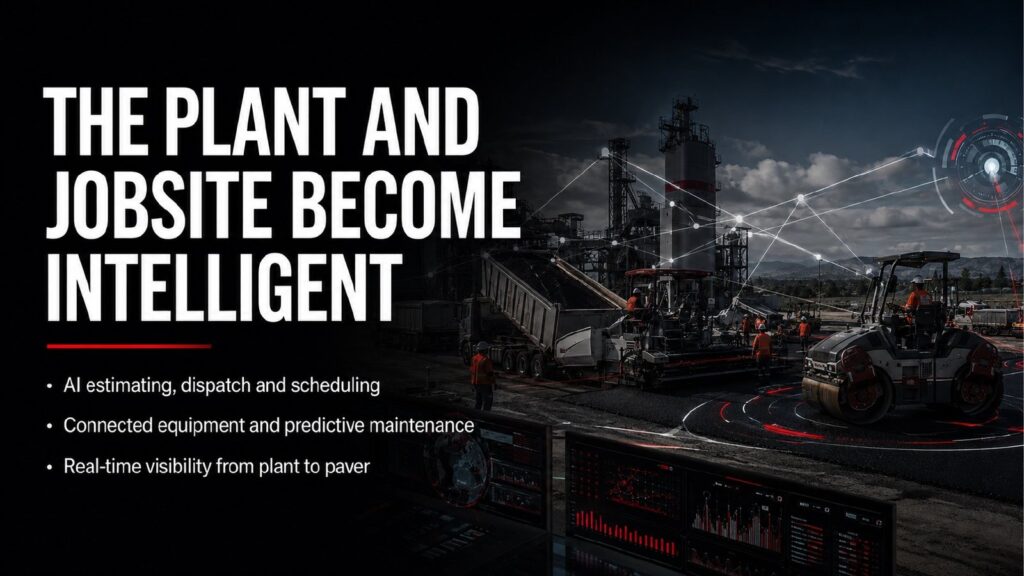
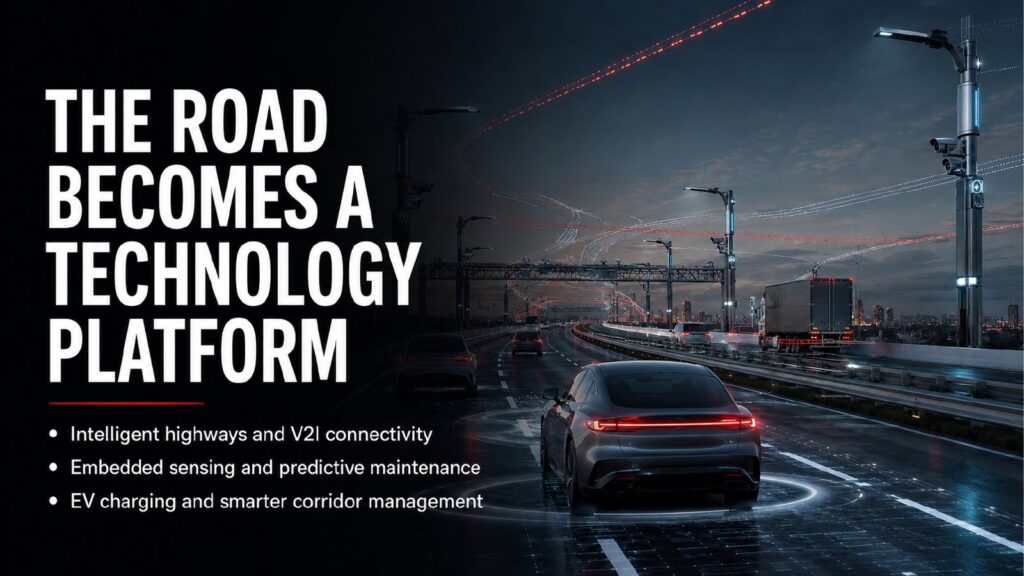
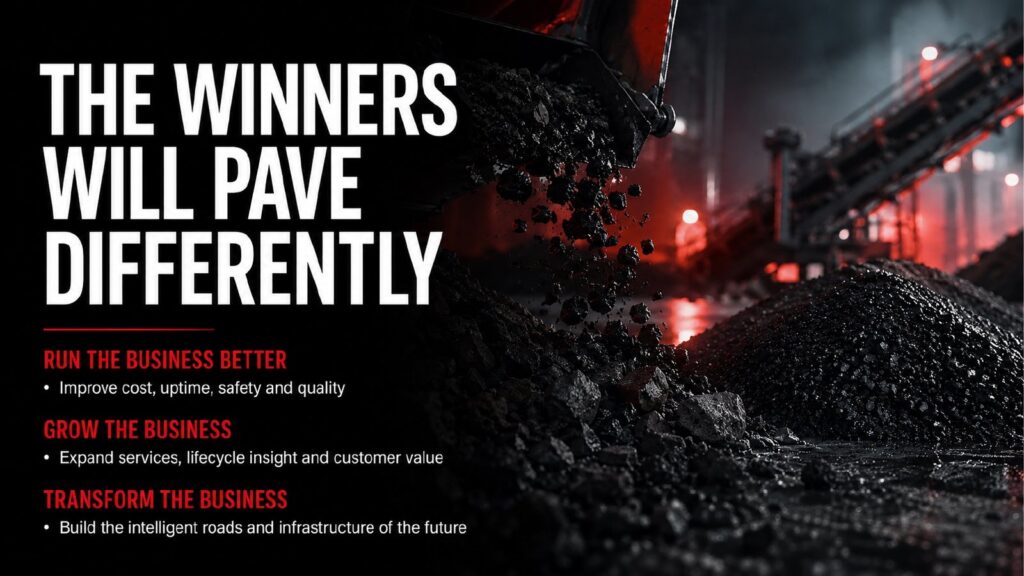
Paving the Future: AI, Innovation and the Accelerating Future of Asphalt, Roads & Infrastructure. From intelligent plants and data-rich jobsites to smart roads, automation, advanced materials and workforce transformation. Selected pages
Ask Jim to build the direction for your audience See the brief →
Solar, batteries, EV charging, microgrids, connected HVAC, smart meters and demand management increasingly blur the boundary between building systems and energy infrastructure.
The future of the built environment is not a set of isolated systems. It is a connected platform where energy, data and physical infrastructure continuously interact.
Construction remains a hands-on industry. But the technology layer is growing around every traditional skill.
Connect design data to construction and long-term asset operation.
Turn continuous site imagery into project intelligence.
Maintain and optimize a growing fleet of autonomous systems.
Use predictive insight without losing the judgement that comes from experience.
In early construction keynotes, Jim used the story of a major home renovation: architectural software, online price checks, direct product research and sourcing gave the customer new information and new power.
That was the first wave. Today the same idea includes AI design tools, augmented visualization, instant pricing, project dashboards and direct digital sourcing.
Transparency, speed, visualization and digital control increasingly shape what owners expect from contractors, suppliers and building-system partners.
Physical products and project execution are essential. They are not always enough to protect margin or strategic relevance.
Sell reliability and performance, not just equipment.
Wrap data, diagnostics and predictive intelligence around the physical product.
Make customer support and problem-solving difficult to commoditize.
Move from supplier to strategic collaborator over the full asset lifecycle.
Jim's work spans corporate leadership meetings, contractor groups, building-system companies, engineering firms, roadbuilders, public agencies and infrastructure operators.
A construction and infrastructure audience focused on disruption, workforce, technology, risk and what comes next for contractor organizations.
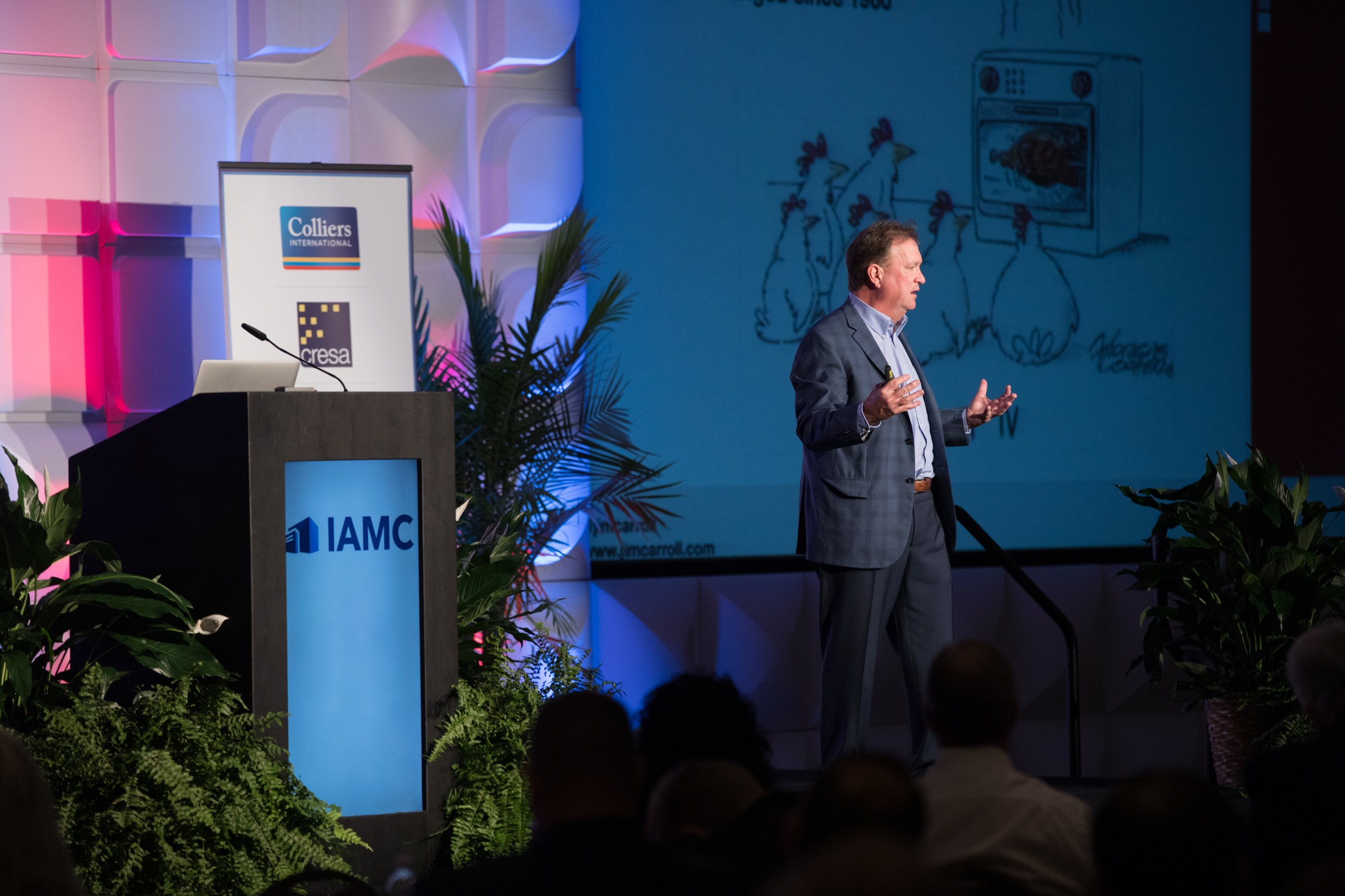
Fortune 500 real-estate executives: portfolio strategy, smart buildings, outsourcing, risk and the future of the corporate built environment.

How connectivity, digital identity, intelligent access and smart-building platforms change the products and systems designed into buildings.
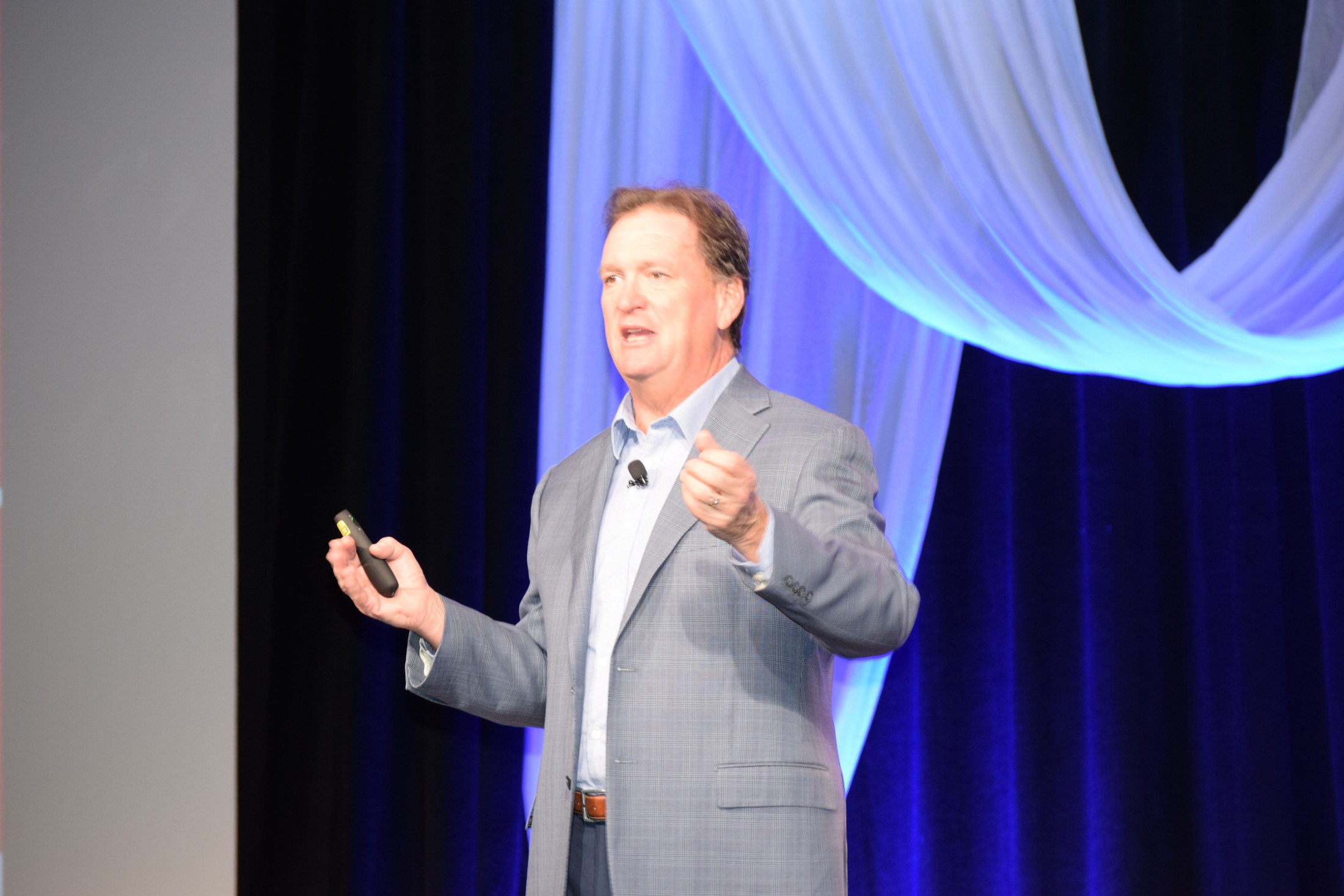
Advanced materials, automation, changing customer expectations and the leadership mindset required to align with accelerating construction innovation.
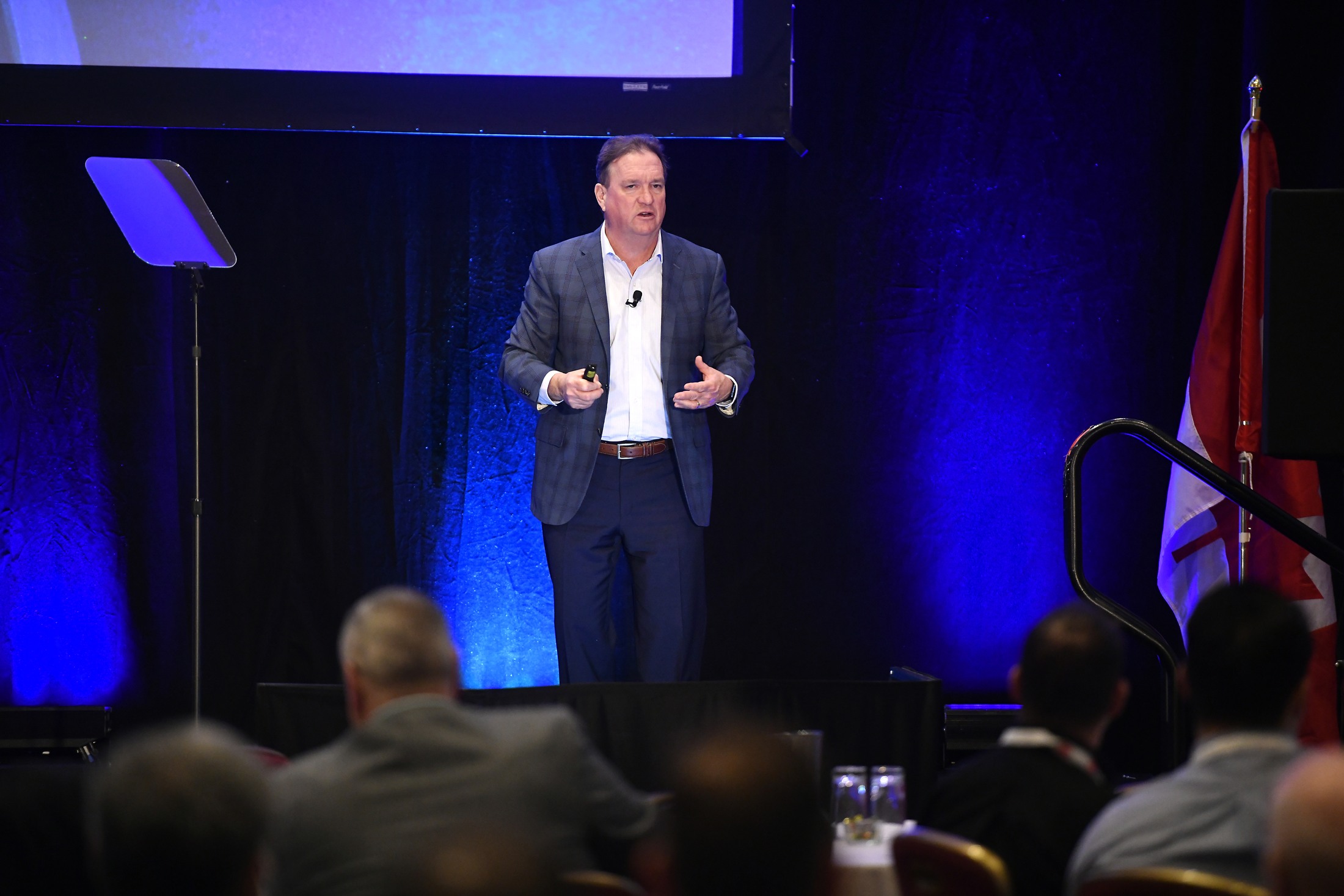
Roadbuilding, intelligent infrastructure, technology, workforce transformation and the acceleration of civil construction.
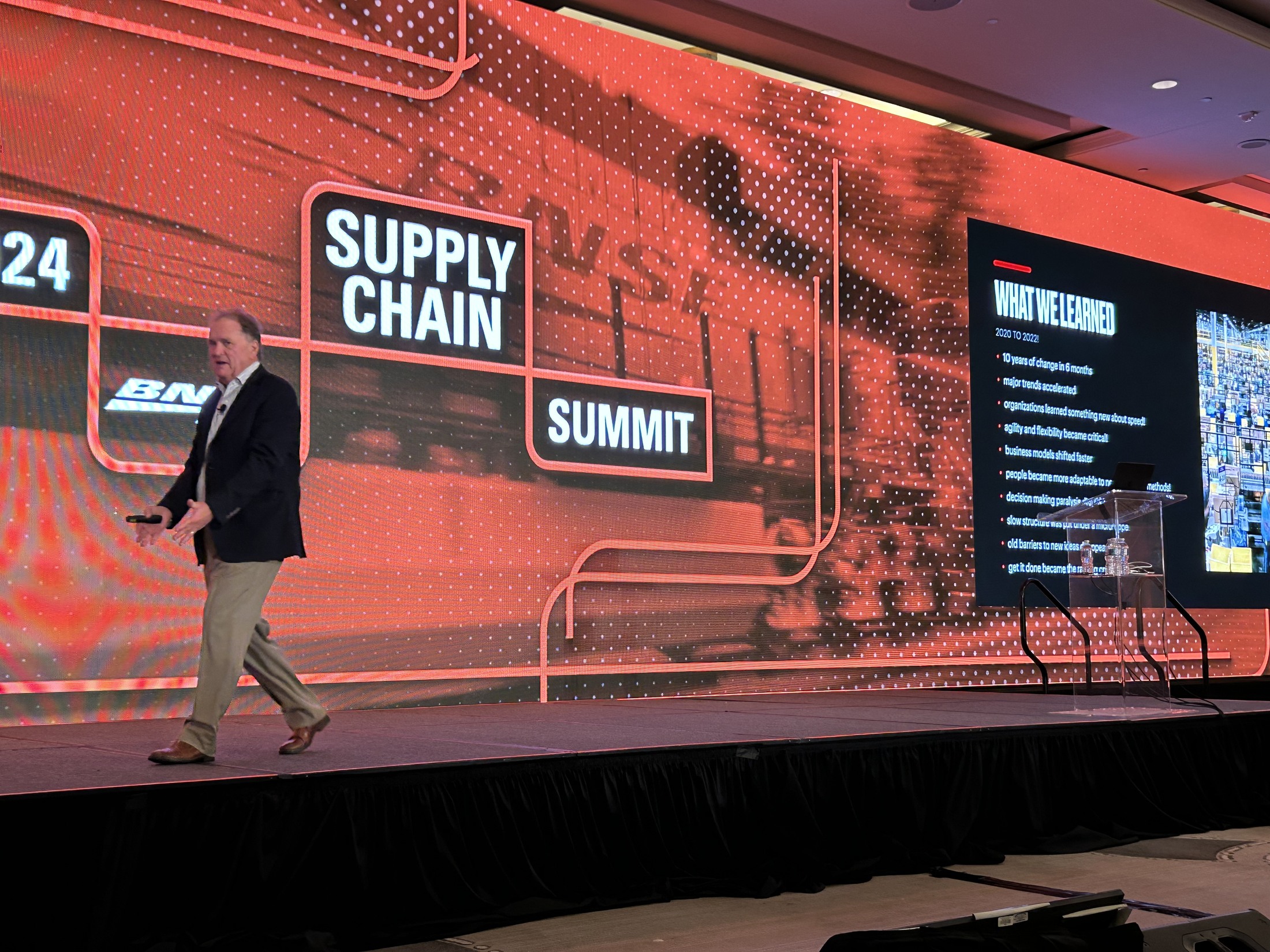
Strategic leadership in an industry where physical infrastructure, data, logistics and automation increasingly converge.
Examples include executive and leadership work for organizations across construction, engineering, equipment, building systems and infrastructure.
Corporate/global leadership conversations around AI, construction technology, workforce, infrastructure acceleration and the decisions leaders must make as the operating model changes.
Leadership and sales audiences focused on the future of infrastructure, disruption, resilience, water, energy and major project transformation.
Dealer product-support leaders and Six Sigma executives: growth, manufacturer-distributor relationships, customer value and avoiding commoditization.
The digital construction story did not begin with AI. Jim was speaking about empowered customers, networked buildings, e-business and smart infrastructure in the 1990s.
Internet disruption, e-business, empowered consumers, building connectivity and the earliest smart-building concepts.
Smart HVAC, public works, heavy-equipment networks, engineering obsolescence and the rise of connected systems.
BIM, smart buildings, connected energy, IoT infrastructure, drones and increasingly data-rich construction.
Digital twins, robotics, autonomous equipment, AI project intelligence, advanced materials and resilient infrastructure.
Self-monitoring assets, autonomous delivery systems, programmable materials and increasingly intelligent cities.
Strong leadership work depends on relevance, customization and an ability to turn complex change into something executives can act on.
“Your insight helped to shape our strategy, comprehend our direction, and understand our future. Thanks for accelerating our thinking!”CEO, Lennox
“We selected Jim because of his accessibility and passion to tailor his expertise to fit our vision. This combination produced exceptional results.”AmstedRail
“I can think of no greater keynote speaker presentation through which I've sat... the thought leadership and action-provoking sentiments he evokes are truly remarkable.”SAP
“For centuries, construction was about brute force. The next century will be about intelligence - smart materials, robotic precision and data-driven design.”Jim Carroll - Construction & Infrastructure
A contractor, an engineering firm, a building owner, an equipment manufacturer and a public infrastructure agency do not face the same future.
Client calls, industry reports, research papers, current news, agenda analysis, audience issues and sector-specific examples. No two presentations are the same.
LISTEN → RESEARCH → MAP THE TRENDS → BUILD THE STORY → CONNECT THE ROOM → LEAVE A PLAYBOOK
Leadership, construction, engineering, building systems, heavy equipment, public works and infrastructure.
Construction & contractors: Kiewit • Alberici • Canadian Construction Association • Ontario Road Builders Association • Distributors Contractors Association • AWCI • electrical contractor audiences
Engineering & infrastructure: Black & Veatch • ACEC • Florida Engineering Society • U.S. Army Corps of Engineers • Colorado Department of Transportation • highway engineering groups
Buildings & building systems: BOMA / BOMEX • Assa Abloy • Lennox • Trane / Ingersoll Rand • GE Lighting • Enbridge Integrated Building Technologies • BICSI
Heavy equipment & industrial: Caterpillar • Parker Hannifin • DaimlerChrysler • PPG • Legrand
Water, energy & public infrastructure: WEFTEC / Water Environment Federation • Tampa Bay Water • City of Calgary Water & Wastewater • The Energy Authority • IMPA • NRECA • Itron
Architecture, planning & real estate: SAIT architecture • Urban Systems • International Asset Management Council • corporate real-estate leadership audiences.
Tell Jim who is in the room, what is changing around them and what you want them thinking about when they leave. He will help shape the right direction around the audience, event theme and business objective.
Who is attending? What type of meeting is it? What decisions are they wrestling with?
Leadership, technology, infrastructure or a blend of all three.
Research, stakeholder calls, agenda integration and industry-specific examples.
Timing, format, fees, travel, logistics and the best next step.
Jim is always pleased to jump on a quick exploratory Zoom or phone call to learn more about the audience, discuss the issues you want to address and talk through possibilities.
Contact Jim Grab the PDF